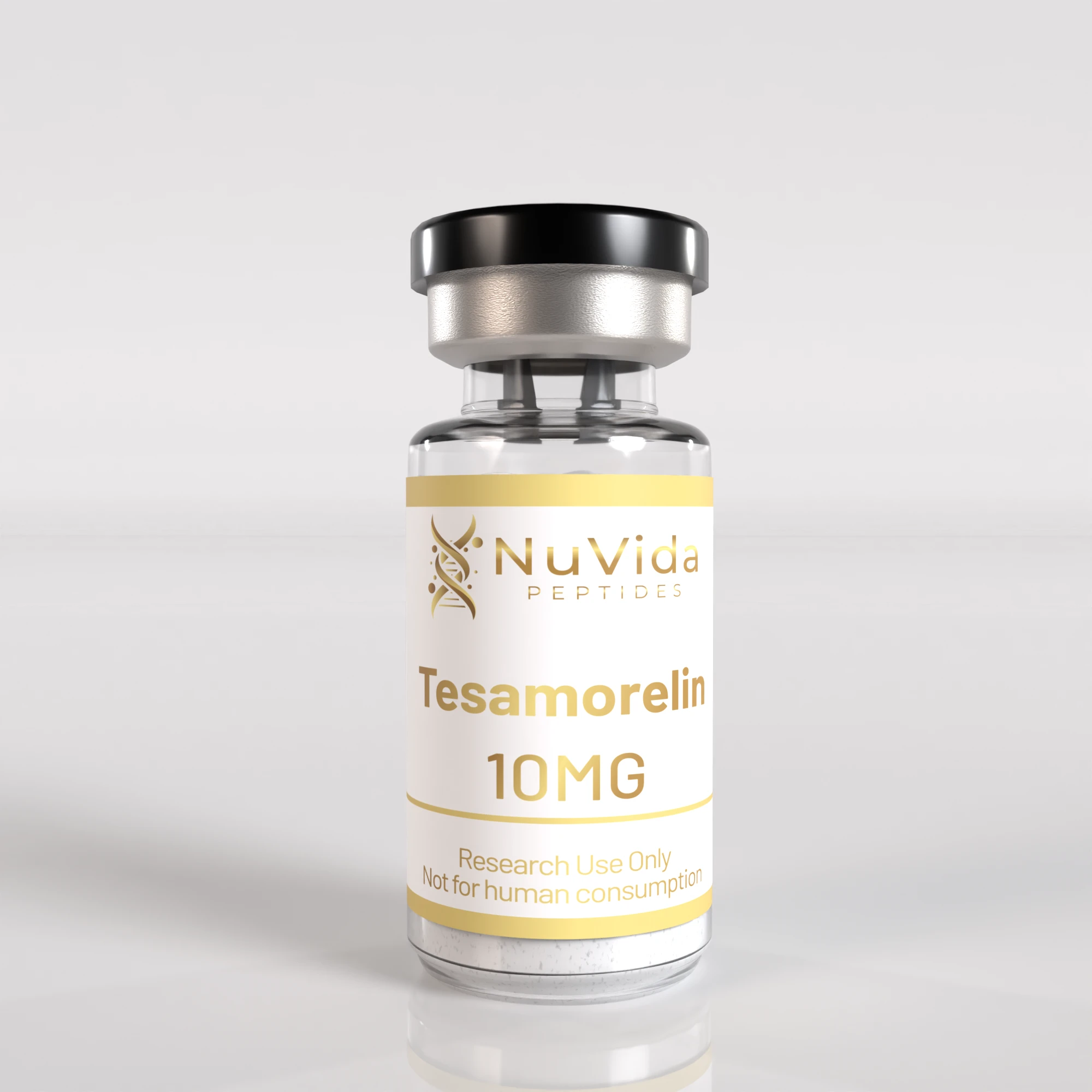

Tesamorelin 10mg
Tesamorelin is a synthetic peptide analog of growth hormone-releasing hormone (GHRH). Designed for research applications, it selectively stimulates lipolysis while modulating other metabolic pathways. This peptide is utilized in academic, pharmaceutical, and scientific investigations to study its potential effects on body composition, metabolic regulation, and related biological mechanisms. Below is a detailed overview of its research context and applications.
Research Context
Tesamorelin has emerged as an important tool in the study of human and animal physiology, particularly in exploring the mechanisms underlying growth hormone signaling, lipid metabolism, and aging. Its selective action on adipose tissue differentiation and breakdown distinguishes it from other peptides, making it valuable for research focused on obesity, metabolic syndrome, and cachexia. Academic institutions and pharmaceutical researchers commonly employ tesamorelin in preclinical models to assess its physiological and biochemical effects.
Research Overview
Tesamorelin functions as a potent agonist of the growth hormone secretagogue receptor (GHSR), which mediates the release of growth hormone from the pituitary gland. Unlike conventional growth hormone therapy, tesamorelin primarily targets adipocytes (fat cells), enhancing lipolysis while preserving lean mass. This property has led to its investigation in models of weight redistribution, such as HIV-associated lipodystrophy, where fat loss in the abdominal region is a key symptom. Research efforts have also explored its potential in studying metabolic aging, insulin sensitivity, and compensatory muscle growth in disease states.
Key Research Focus Areas
-
Lipid Metabolism and Body Composition:
Tesamorelin is widely studied for its ability to promote selective fat loss in abdominal visceral adipose tissue while maintaining muscle mass, making it relevant to investigations on metabolic health and obesity. -
Metabolic Regulation and Aging:
Research examines how tesamorelin influences insulin sensitivity, glucose metabolism, and systemic inflammation, particularly in models of metabolic syndrome and aging-related sarcopenia. -
Pathophysiology of Disease-Associated Cachexia:
In preclinical studies, tesamorelin has been assessed for its potential to mitigate excessive muscle and fat loss in conditions such as HIV/AIDS, cancer cachexia, and chronic kidney disease. -
Neuroendocrine and Growth Hormone Signaling:
Investigations explore the molecular pathways through which tesamorelin modulates GHSR activity, including its effects on peptide hormone secretion and tissue-specific responses.
Important Compliance and Safety Notice
Tesamorelin 10mg is intended solely for use in approved academic, pharmaceutical, or biotechnological research applications. This product is not authorized for human or animal therapeutic, diagnostic, or cosmetic use. Any distribution or application outside of a licensed research setting may be unlawful and constitutes a violation of applicable regulations. Users must adhere to all local, national, and international laws governing the possession and use of peptides, including those related to export controls, import restrictions, and controlled substance regulations. For research use only. Not for human or animal consumption.

Reviews
There are no reviews yet.