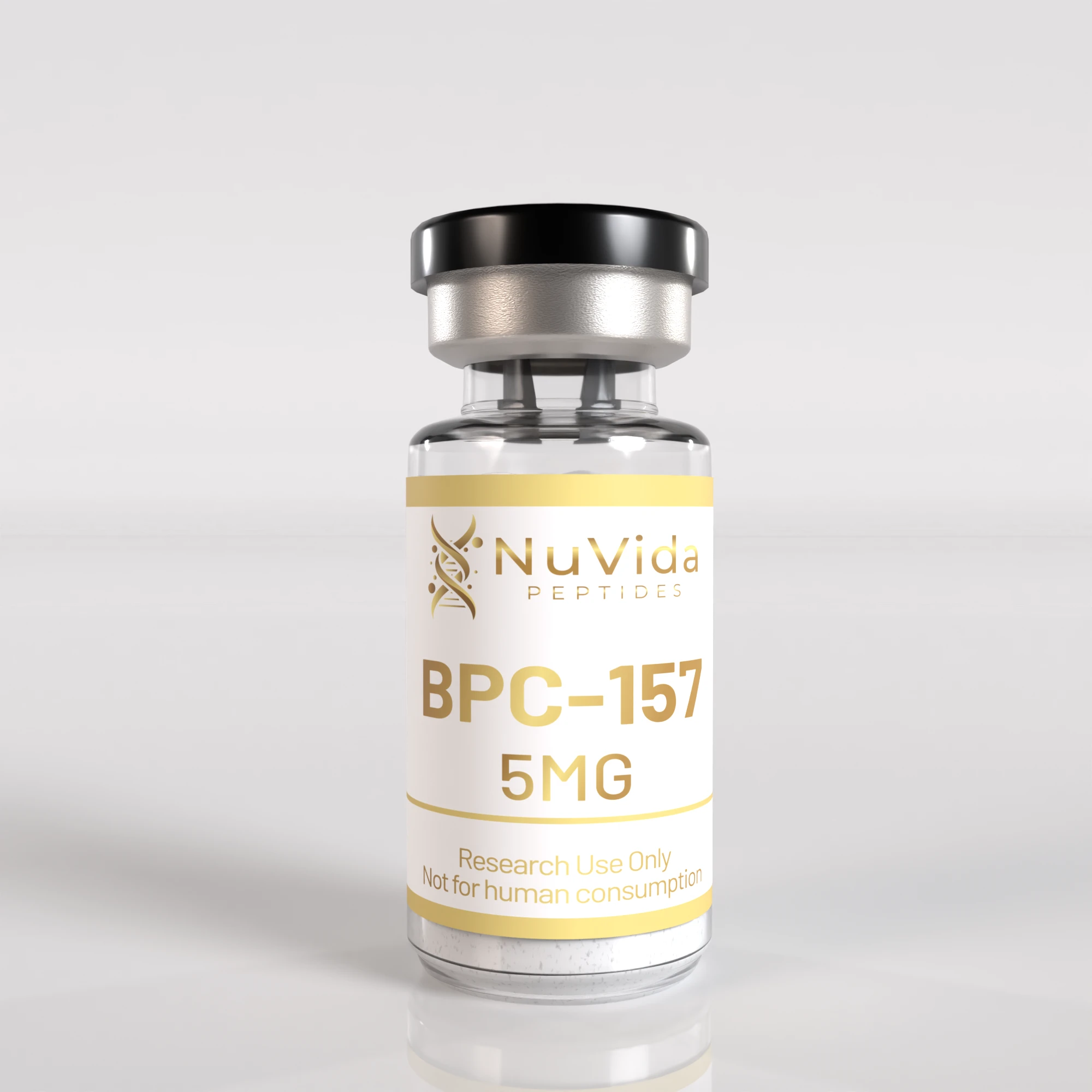

BPC-157 5MG
BPC-157 is a synthetic peptide sequence derived from bovine polypetide chains, originally isolated from bovine cardiac tissue. This product is intended for researchers engaged in biological, biochemical, or pharmacological studies involving peptide chemistry, tissue regeneration, or related biomedical research applications.
BPC-157 is composed of the sequence BPC-157: Gln-Pro-Pro-Ala-Gly-Pro-Pro-Glu-Pro-Ala-Gly-Pro-Pro-Glu-Pro-Lys-Pro-Ala, which is structurally analogous to endogenous healing factors found in the body. Initial research has explored its potential roles in tissue repair, inflammation modulation, and wound healing mechanisms.
Research Context
BPC-157 emerged from studies investigating naturally occurring peptides that promote healing and tissue regeneration. Early investigations focused on its potential therapeutic effects in acute injury models, such as musculoskeletal damage, gastrointestinal injuries, and wound healing. While extensive clinical trials are not yet available for direct human application, preclinical research has provided foundational insights into its biological mechanisms.
Research Overview
Research conducted thus far has primarily utilized animal models to evaluate BPC-157’s effects on wound healing, gastrointestinal barrier repair, and inflammatory responses. Findings suggest that BPC-157 may modulate signaling pathways associated with tissue regeneration, such as the TGF-β (transforming growth factor-beta) pathway, while also demonstrating anti-inflammatory effects in experimental settings. These studies remain exploratory and are part of ongoing scientific investigation.
Key Research Focus Areas
- Wound Healing and Tissue Repair: Investigation of BPC-157’s role in accelerating healing processes in experimental models of acute injuries, including burns and surgical incisions.
- Gastrointestinal Integrity: Exploration of its potential to restore barrier function and reduce inflammation in models of gastrointestinal damage, such as those induced by chemical irritants or ischemic injury.
- Inflammation and Immunomodulation: Examination of its effects on pro-inflammatory cytokine profiles and immune cell activation in response to injury or pathological stimuli.
- Mechanistic Pathways: Analysis of intracellular signaling pathways, including those involving MAPK, NF-κB, and TGF-β, which may underlie its regenerative and anti-inflammatory effects.
- Comparative Peptide Studies: Comparative analysis of BPC-157’s effects relative to other peptides, such as BPC-174, to understand differences in specificity and functional outcomes.
Researchers utilizing BPC-157 in laboratory settings should follow established protocols for peptide handling, storage, and experimental design to ensure reproducibility and safety in their studies. This product is not intended for direct administration to animals or humans and is solely for use in controlled academic or industrial research environments.
Safety and Compliance Statement
While initial preclinical studies suggest potential biological activity, the safety and efficacy of BPC-157 for any use outside of peer-reviewed research have not been rigorously evaluated. Researchers are advised to consult appropriate ethical guidelines, regulatory standards, and institutional protocols specific to their institution. This product is not intended for human or animal consumption. Misuse or improper handling may pose risks to laboratory safety and research integrity. Always conduct experiments in accordance with established scientific practices and regulatory requirements applicable to your field.
For research use only. Not for human or animal consumption.

Reviews
There are no reviews yet.